Integrating Sweet Biker Rhinestone Templates into Your Design Workflow
For entrepreneurs and creators in the custom apparel and crafting space, efficiency is not just a goal; it is the foundation of profitability and consistent output. The transition from a creative idea to a tangible product involves numerous technical steps where friction often occurs. Sweet Biker Rhinestone Templates serve as a critical bridge in this process, transforming abstract concepts into production-ready assets. By understanding where these templates fit within the broader lifecycle of a project, you can streamline operations, reduce material waste, and ensure a higher quality finish on items ranging from t-shirts to greeting cards.
Understanding the Asset Package
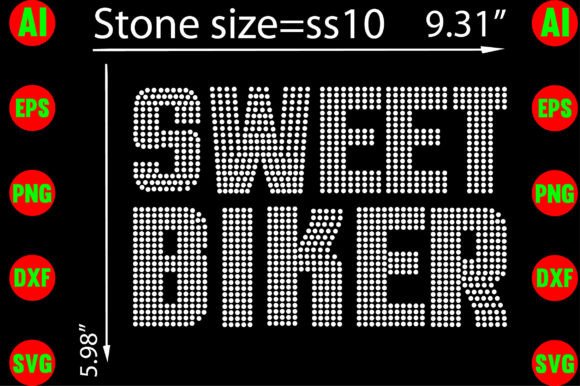
Before integrating these assets into your workflow, it is essential to understand the technical specifications of the deliverables. When you secure the Sweet Biker Rhinestone Templates via instant download, you receive a compressed zip folder containing a comprehensive suite of file types. This package typically includes high-resolution JPEG files, vector-based DXF, SVG, EPS, and AI files, as well as transparent PNGs, all standardized at 300 DPI. This variety is not arbitrary; it is designed to ensure compatibility across the diverse software ecosystems used by designers and fabricators.
The presence of vector files (SVG, DXF, AI) is particularly vital for those utilizing cutting machines. Unlike raster images, which lose clarity when scaled, vector paths allow for infinite resizing without pixelation. This means the same Sweet Biker Rhinestone Template can be used for a small chest emblem on a baby onesie or a large back graphic for a men's jacket without redrawing the design. The 300 DPI resolution across all files ensures that even the raster formats (JPEG and PNG) maintain sharp edges and clarity for high-quality printing or sublimation processes.
Pre-Production Planning and File Selection
The efficiency of your project depends largely on the decisions made during the planning phase. Selecting the correct file format for your specific output device is the first practical step. For instance, if your end goal is to create a vinyl decal or an iron-on transfer using a Cricut or Silhouette machine, the SVG or DXF file is your primary asset. These formats are recognized by the proprietary software (such as Cricut Design Space or Silhouette Studio) and allow the machine to interpret the cut paths accurately.
Conversely, if the project involves digital marketing, such as creating mockups for a website or social media banners, the transparent PNG is often the superior choice. Its transparent background allows for seamless layering over other images or textures without the need for complex masking. If you are working with a print shop that requires specific legacy formats, the EPS or AI files offer the versatility needed for professional offset or digital printing. By categorizing your files based on the end-use before you even begin the design software, you create a more organized and predictable workflow.
Software Integration and Design Manipulation
Once the appropriate file is selected, the next phase involves integration with your primary design software. For users of Adobe Illustrator, the AI or EPS files provide the most control, allowing for the manipulation of individual anchor points and color fills. This is particularly useful when customizing the typography or adjusting the scale of specific elements within the Sweet Biker Rhinestone design to fit a unique garment pattern.
For those using the design for scrapbooking or poster creation, the JPEG files serve as a ready-to-use element. However, to truly optimize the workflow, consider how these templates interact with your layer management. Treating the template as a locked background layer allows you to build typography and additional graphics on top without accidentally altering the core design. This non-destructive editing approach ensures that you can revert changes or make adjustments later in the process without having to re-download or re-import the original asset.
Production Execution: From Screen to Surface
The true value of Sweet Biker Rhinestone Templates becomes apparent during the production stage. For creators utilizing cutting machines, the workflow moves from digital manipulation to physical fabrication. After importing the SVG file into your cutting software, the process involves setting the material type—whether it is heat transfer vinyl (HTV), standard vinyl, or rhinestone template material.
A critical implementation tip here is to account for the "weeding" process. While the digital file represents the final design, the physical execution requires removing the negative space. High-quality vector templates are optimized with proper node spacing, which makes the weeding process smoother and less time-consuming. When applying these designs to textiles, such as t-shirts or hoodies, the precision of the cut file ensures that the alignment is perfect, which is crucial for professional-looking merchandise.
Beyond apparel, these files facilitate the creation of physical stationery. When designing cards or invitations, the high-resolution nature of the files ensures that the printed output does not exhibit jagged edges. For small business owners, this consistency is key to brand reputation. A greeting card printed using a 300 DPI file looks significantly more polished than one derived from a low-resolution web image.
Quality Control and Material Compatibility
As you move through the production process, quality control becomes the gatekeeper of your final product. One common pitfall in the use of clip art and templates is the failure to test material compatibility. A design that looks perfect on screen may behave differently when applied to different fabrics or substrates. For example, a dense rhinestone pattern might require a stronger adhesive or a longer press time on cotton compared to polyester.
It is advisable to run a test cut or a sample print before committing to a full production run. This practice, often skipped in the rush to fulfill orders, is actually a time-saver in the long run. It prevents the waste of expensive materials like vinyl or cardstock and ensures that the final product meets the durability expectations of the customer. Furthermore, checking the registration marks when using multiple colors or layers ensures that the final iron-on transfer or decal is perfectly aligned.
Expanding Application and Long-Term Utility
The versatility of Sweet Biker Rhinestone Templates extends beyond the immediate project. These assets can be repurposed for a variety of applications, making them a valuable addition to any digital library. For educators and bloggers, the designs can be adapted for visual aids, classroom posters, or digital content headers. The ability to resize vector files means that the same design can be adapted for a small sticker or a large banner without additional cost or effort.
For entrepreneurs, maintaining a well-organized library of these templates is a strategic advantage. By categorizing files by theme, format, or intended use, you reduce the time spent searching for assets during the creative phase. This organizational discipline transforms your workflow from reactive to proactive. Instead of scrambling to find a suitable design when a client request comes in, you can quickly access a relevant template, customize it, and provide a proof, thereby shortening the sales cycle.
Ultimately, the integration of Sweet Biker Rhinestone Templates into your routine is about removing technical barriers. By providing high-quality, multi-format files, these templates allow you to focus on the creative and business aspects of your work—whether that is designing for men, women, kids, or creating specialized merchandise for birthdays and events. The goal is to let the tools handle the precision so you can focus on the execution and the customer experience.